


What is the Minimum Social Security Benefit for 2023?
by April L. Roberts | Jun 28, 2023

If you receive Social Security (SS) for retirement or will be soon, you might be happy to learn that recipients just received the highest cost-of-living adjustment (COLA) in over four decades. The new COLA applies to Social Security beneficiaries, including those receiving disability benefits. It also impacts the special minimum benefit for SS. Here we look at the minimum social security benefits you can receive, what it is based on, and how COLA is applied.
What is the minimum social security benefit?
The Social Security special minimum benefit is a primary insurance amount (PIA) for low-earning workers. To qualify, you must have earned the minimum earning threshold and worked at least 11 years at or below that level.
What is the minimum income threshold for 2023?
The minimum income threshold for 2023 is $17,820.
What’s the minimum you can get from social security?
For 2023, the lowest minimum PIA, with at least 11 years of work, is $49.40 per month. To receive the full minimum PIA, you must work at least 30 years to receive $1,033.50 monthly.
A history of social security benefit increases
Here is a brief history of social security minimum benefits in recent years:
What was the social security minimum benefit 2022?
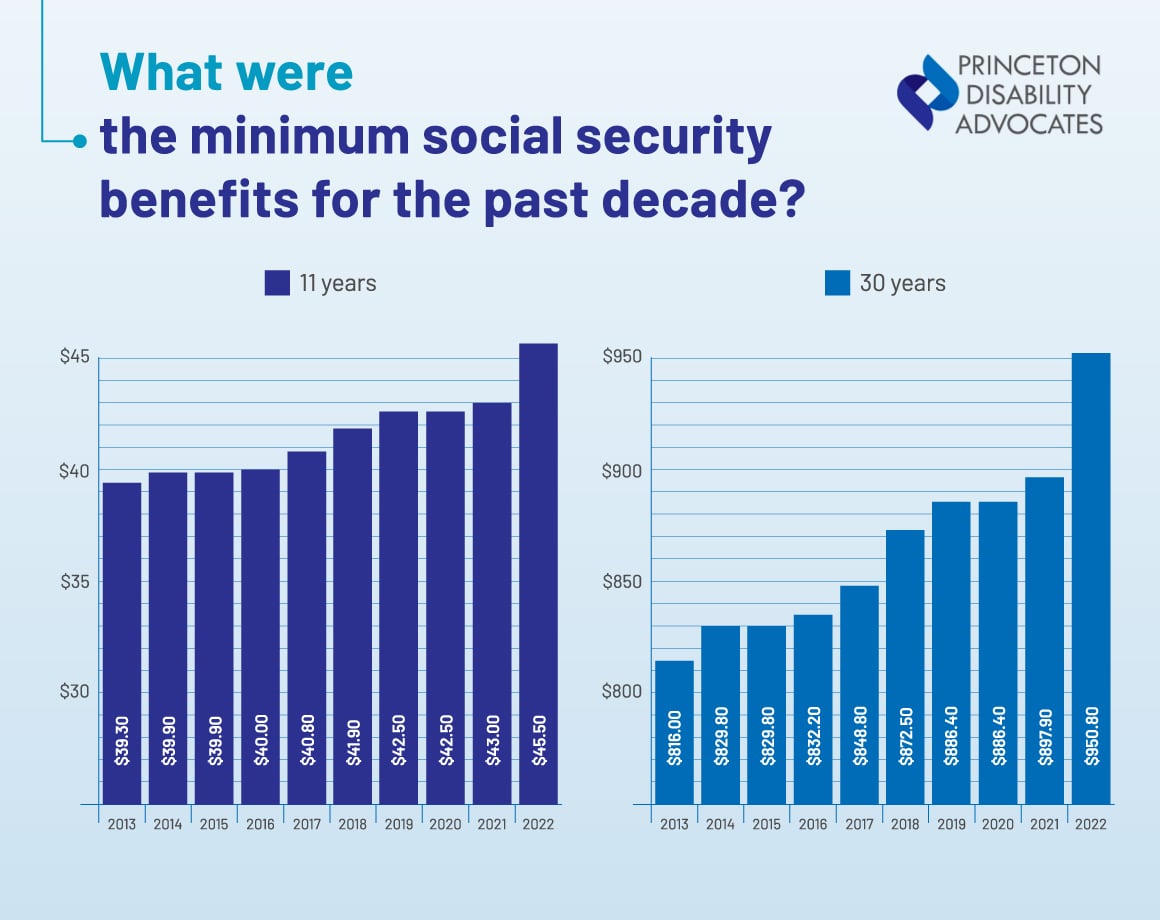
In 2022, the minimum earnings threshold was $16,380. A worker with 11 years of coverage received a special minimum Social Security benefit of $45.50 per month and $950.80 per month with 30 years of coverage.
What is the minimum social security benefit for 2021?
For 2021, the minimum earnings threshold was $15,930. A worker with 11 years of coverage received a special minimum SS benefit of $43, and a person with 30 years of coverage received $897.90.
What were the minimum social security benefits for the past decade?
Going back a decade, the minimums were as follows:
Looking to the future, experts predict Social Security will see the 2024 COLA fall below the record-breaking levels seen in 2023 at an estimated 3.31 percent. This decrease is due to new consumer price index data showing that inflation rose 4.9 percent over the past year and a mere 0.4 percent month over month in April. This could indicate a slowdown in the cost-of-living.
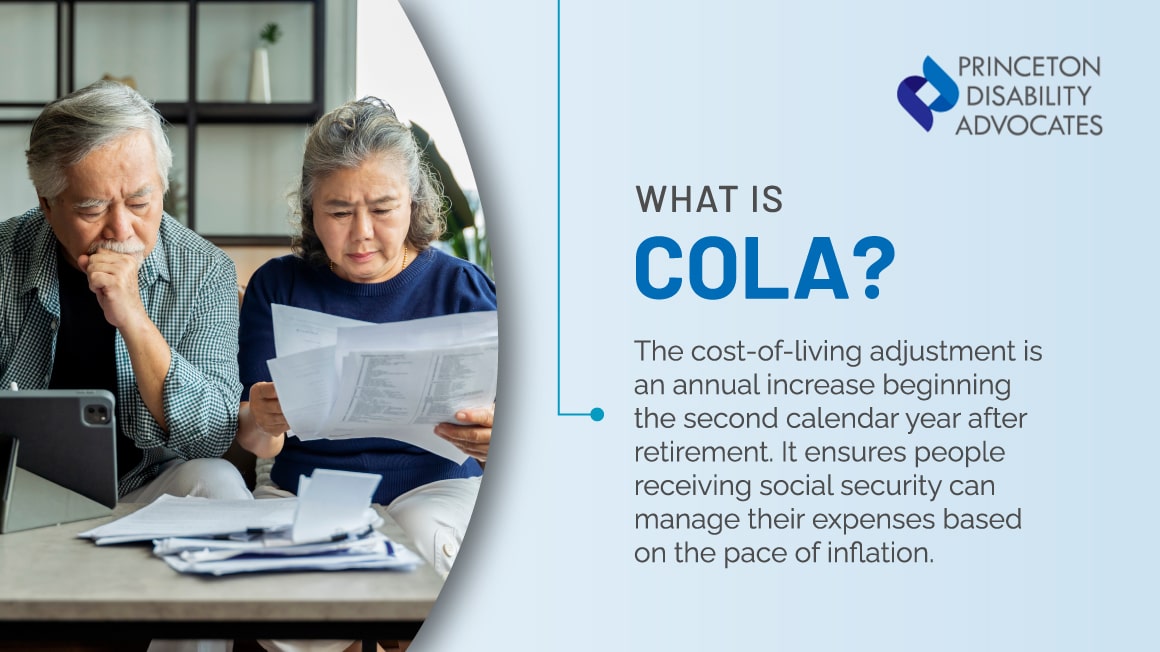
What is COLA?
The cost-of-living adjustment is an annual increase beginning the second calendar year after retirement. It ensures people receiving social security can manage their expenses based on the pace of inflation. Although COLA is not always required, if COLA does apply, eligible retirees, beneficiaries, and survivors receive it automatically, effective on their May 1st retirement checks.
How is COLA determined?
COLA is determined using changes to the Consumer Price Index for Urban Wage Earners and Clerical Workers (CPI-W). Calculated by the Bureau of Labor Statistics on a monthly basis, the CPI-W from the third quarter of the preceding year is applied to the third quarter of the current year to determine COLA.
The minimum social security benefit
To qualify for social security, you must earn at least 40 Social Security credits by working and paying your Social Security taxes. The credits determine whether you are eligible for retirement, as well as whether you qualify to receive disability benefits when you are unable to work. They also apply to Medicare.
How you earn credits
You can earn up to four credits each year you work based on your total wages/self-employment income. However, the amount you need to earn to reach your credits changes each year. For example, in 2023, you earn one Social Security and Medicare credit for every $1,640 in covered earnings. To get your maximum four credits for the year, you must earn $6,560.
Do I get higher benefits if I earn over 40 credits?
Although you can earn more than the minimum 40 credits required for your lifetime, having more does not increase your benefit amount. Instead, the benefits you receive are based on your average earnings over your working years.
What is the minimum and maximum social security benefit for 2023?
This is an important question as the retirement age impacts the minimum and maximum social security benefits you receive.
What is the minimum social security payment at age 65?
Social Security monthly benefits increase by a percentage amount determined by your date of birth. This percentage is applied every month from when you reach full retirement age until your turn 70. As a result, you can see a significant increase in your benefits by waiting a few years. For example, if you were born on May 5, 1974, retiring at 62 would pay out $24,840 each year. However, if you retired at age 67, this would increase to $37,668 a year. As you can see, this is a substantial difference.
Remember that the maximum for those who receive their SS at retirement age is $3,627 a month in 2023.
What is the minimum social security benefit at 62?
Your benefits are approximately 30 percent lower if you file at the minimum retirement age of 62.
What is the minimum social security payment over 70?
Your benefits remain the same once you reach the age of 70, as there are no more incremental percentage benefit increases for recipients over 70.
What is the average SS payment in 2023?
The COLA has increased the average monthly Social Security payment from $1,681 to about $1,827. That’s $146 a month or $1,752 a year.
What are the maximum taxable earnings for 2023?
If you are holding out on your retirement, the limit on the amount your annual earnings can be taxed or “maximum taxable earnings” in 2023 is now $160,200.
COLA and disability payments
COLA also impacts disability payments which increased by 8.7 percent in 2023. The average increase for people with disabilities will be about $1,483, with no minimum amount applied for disability benefits.
If you are suffering from a physical or mental condition keeping you from working, you could be eligible to receive SSDI. For more information, contact the experts at Princeton Disability Advocates for a free consultation.