


Understanding the Social Security Disability Appeal Process for Individuals 50+
by April L. Roberts | Jul 19, 2023

Although it can be easier to qualify for social security disability when you are 50 plus because the application process is so complex and lengthy, you might find your initial application is denied. Although this is disheartening, only 34% of initial applications are approved by the Social Security Administration (SSA) without the assistance of a disability advocate. The good news is that this is by no means the final step in the process. If you are over 50 and the SSA denies your initial application, you can appeal that denial.
Understanding the Social Security Disability appeal process can be even more complex than the initial application process. Therefore, it is crucial to seek assistance to review your options and learn how to appeal a denial. Here we share the steps involved during the SSDI appeals process and how a disability advocate helps ensure you are awarded the benefits you are entitled to receive.
Your Initial Denial
When you submit your initial application, you will receive what is called a written initial determination. All initial denials are appealed via a written request sent within 60 days of the date you receive your notice. Although the notice explains how to appeal, it can be confusing and difficult without support and guidance. Therefore, it’s important for individuals aged 55 and above to request assistance from a disability advocate who can explain the next steps.
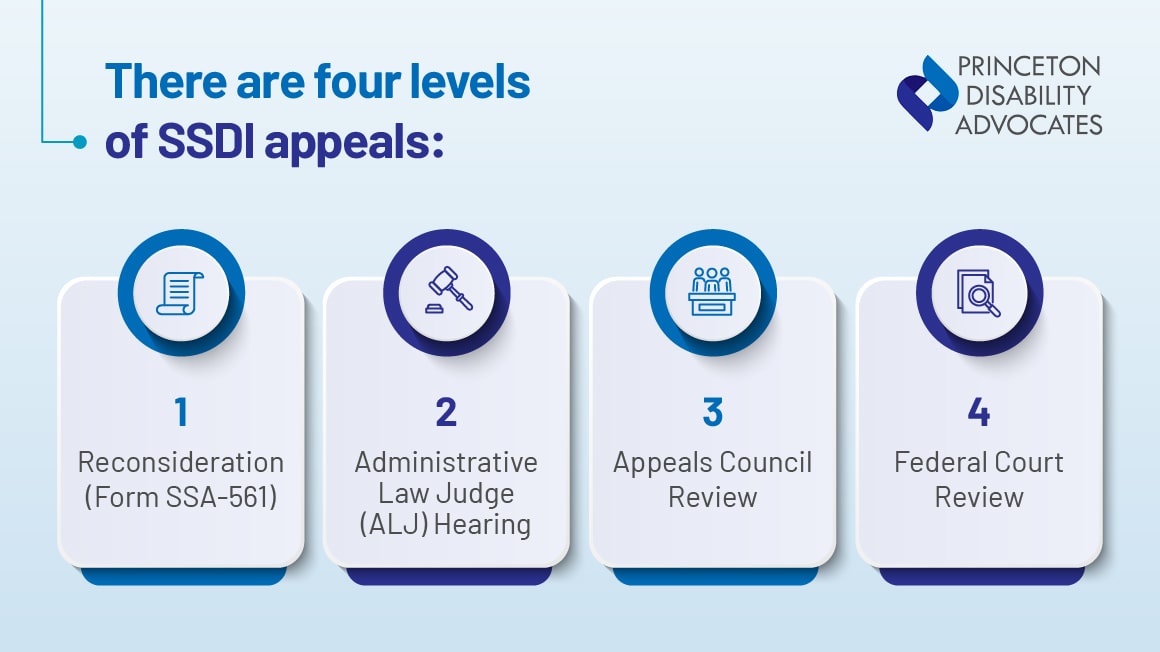
How to file an appeal with social security: The entire social security disability appeal process
There are four levels of SSDI appeals:
1) How to file an appeal with social security: Reconsideration (Form SSA-561)
Filing a request for reconsideration initiates a complete review of your claim. The claim is reviewed by a “second set of eyes,” considering the evidence submitted with your initial submission. However, the fact your request was denied means you are likely missing critical medical evidence to support your claim. A disability advocate will ensure all of your relevant medical records and documents are included this time around to help establish your disability and help you pass your evaluation.
Also, adding to the complexity of this first level of appeal, the SSA will send your request for review to the Disability Determination Services (DDS) for your State. As a result, you will receive letters with further questions and requests for information. A Princeton disability advocate will manage correspondence with the state and ensure the correct, thorough information is shared with the state DDS to prove your credibility.
2) How to file an appeal with social security: Administrative Law Judge (ALJ) Hearing
If your claim is denied during the reconsideration stage, the next step is to request a hearing before an Administrative Law Judge (ALJ). You need to appeal to your local office, which sends your request for a hearing to an SSA hearing office. You will then receive a notice telling you the date of your hearing. The hearing reviews your claim and considers the evidence, ensuring everything is in order and all the medical information is available for review.
Because this is a very detailed hearing, the SSA recommends reaching out to a representative as soon as possible to provide enough time for them to review your case and become familiar with the information.
A representative, such as a Princeton disability advocate, listens to the ALJ’s explanation about the issues with your application. They will also have the opportunity to ask questions and bring in witnesses relevant to your case. This is important as the SSA will have medical or vocational experts present. Having a representative present ensures witnesses are questioned in a manner that helps establish your case.
3. Appeals Council Review
If the ALJ denies your claim, you have the option to request a review from the Appeals Council. Again, an advocate is key as the Appeals Council can deny or dismiss your request for review if it believes the hearing decision was correct. To ensure your request is granted, it helps to have a representative in your corner.
When the council grants your request, there are two things that can happen:
- They will issue a new decision on their own, or
- Return your case to an ALJ for further action
An advocate can make sure you request a review within 60 days or at least let the council know why you were unable to do so. Also, they will provide additional evidence when you file your request for review in hand with a clear and concise explanation of why you are requesting the review. This helps the council understand the potential issues with the ALJ’s decision. Your advocate will also request copies of the hearing recordings to help find weaknesses that support the request for a denial.
4. Federal Court Review
If the Appeals Council denies your request or declines to review your case, you have the final option of filing a lawsuit in federal court. You will require legal representation as your case will be presented before a judge. Prepping for the case is difficult and time-consuming. Sticking with your disability advocate, who understands the process and what you went through at each stage, ensures all relevant information is available for your lawyer so nothing is missed. They help ensure you finally receive the benefits you deserve.
How long does the social security disability appeal process take?
It can take from four to 12 weeks at each stage of the SSDI appeals process.
When to Seek Professional Assistance
The moment you receive your denial, you should contact a disability advocate to start the SSDI appeals process for you. They know how to file a Social Security disability appeal and are experienced in dealing with the social security appeal process. They can initiate the SSI reconsideration process and help with SSI appeals from start to finish to make the process less overwhelming.
They will also appeal social security decisions at each stage until they help you see the desired outcome. This is especially important for individuals aged 50 and above who are more likely to qualify with the assistance of an advocate like Princeton Disability.
If you are wondering how to file an appeal for disability, reach out to Princeton Disability for a free consultation. We specialize in SSDI appeals and will help you get the maximum payout for the SSDI benefits you deserve.