


Is Mental Illness a Disability? What Qualifies for SSD/SSDI?
by April L. Roberts | Oct 23, 2023

During our golden years, we can become more vulnerable to mental health issues, impacting our overall health and well-being. Therefore, it’s essential to raise awareness about mental illness in individuals over 50 and how it can affect their quality of life. Promoting empathy about mental health conditions is also crucial to help remove the stigma associated with what can often become a debilitating illness.
This raises the question, “Is mental illness a disability?” If so, does it qualify for SSD/SSDI benefits? The connection between mental health conditions and potential disability status is often viewed as a gray area, requiring clarification for those entering the later stages of life. Here, we share valuable insights on mental illness and disability to help you find the assistance you need.
Unraveling the Link Between Mental Illness and Disability
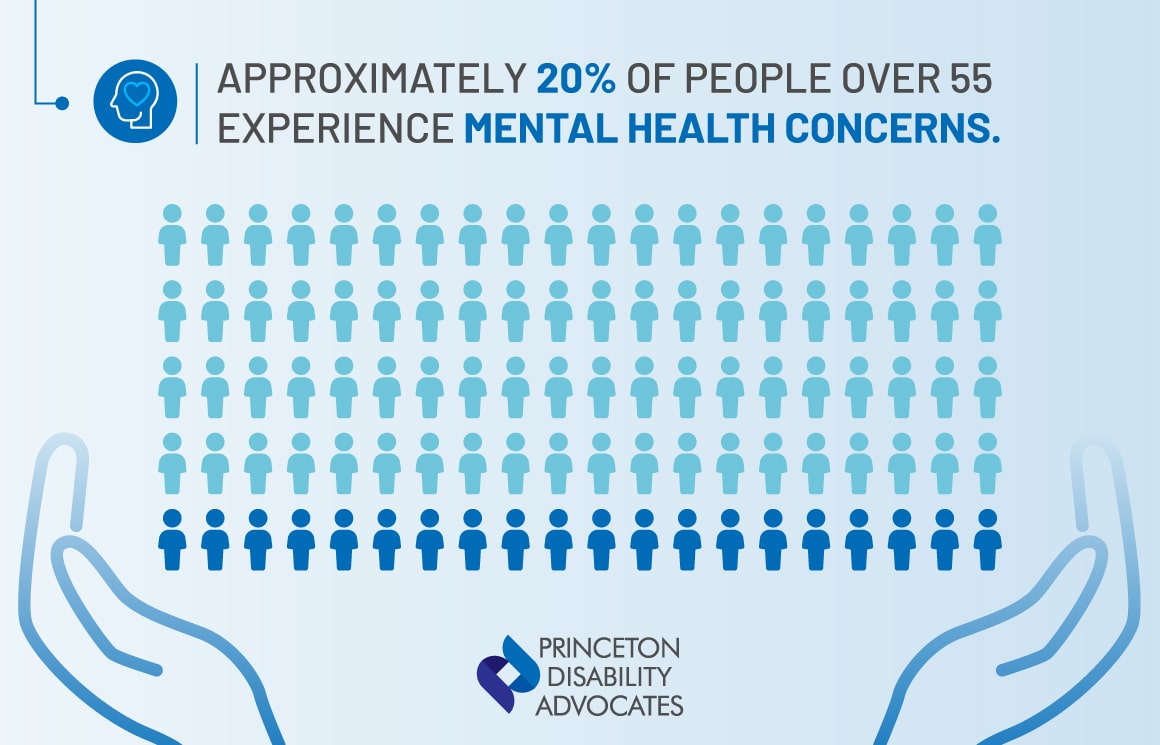
Approximately 20% of people over 55 experience mental health concerns. Although not all mental health issues are considered a disability, when your mental health prevents you from working, it falls into a class called psychiatric disabilities. These conditions can impact your capacity to establish or maintain consistent work patterns or require time away from work to recover.
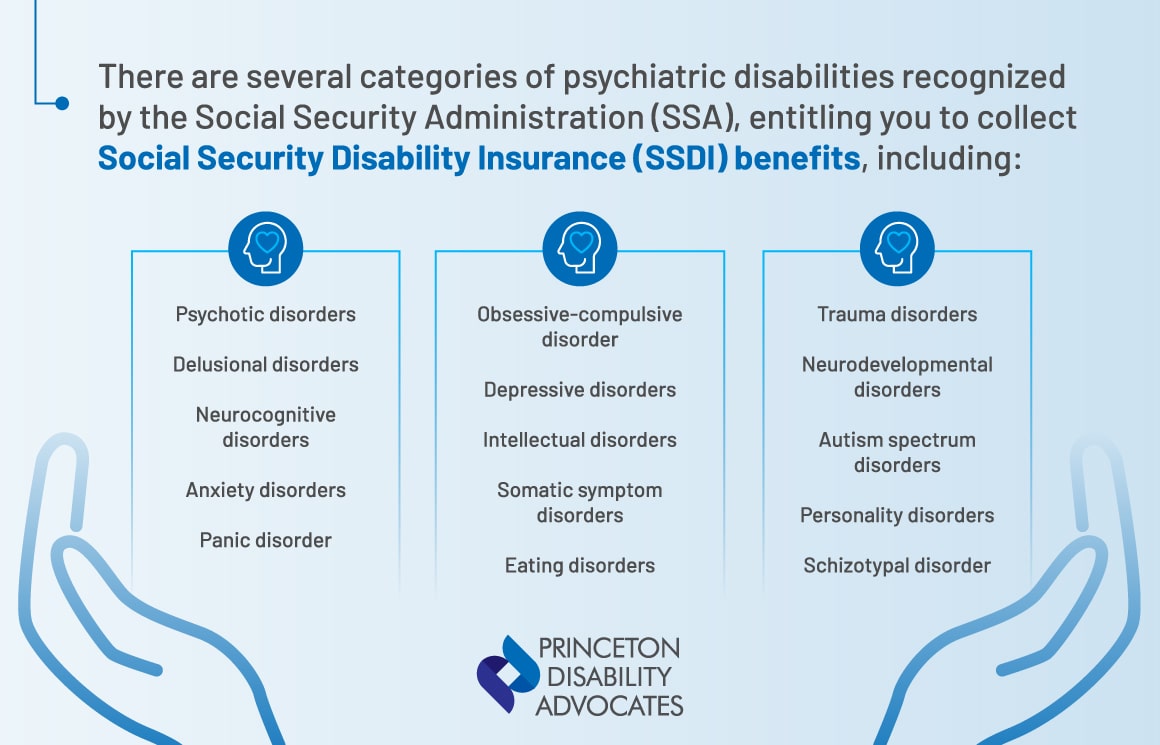
There are several categories of psychiatric disabilities recognized by the Social Security Administration (SSA), entitling you to collect Social Security Disability Insurance (SSDI) benefits, including:
- Psychotic disorders
- Delusional disorders
- Neurocognitive disorders
- Anxiety disorders
- Panic disorder
- Obsessive-compulsive disorder
- Depressive disorders
- Intellectual disorders
- Somatic symptom disorders
- Eating disorders
- Trauma disorders
- Neurodevelopmental disorders
- Autism spectrum disorders
- Personality disorders
- Schizotypal disorder
Mental Health Challenges in the Aging Population
People over 50 face unique challenges that can contribute to mental health issues. As we age, we tend to see the loss of more loved ones, including our parents and life partners. When we retire, we are at increased risk of feeling isolated and having difficulty adjusting to such a dramatic change in our lifestyle. These changes can lead to mental health conditions or intensify symptoms of existing conditions such as depression.
Understanding Mental Illness as a Disability & SSD/SSDI Qualifications
A mental health condition can impact your ability to achieve maximum productivity in the workplace. As a result, under the Americans with Disabilities Act (ADA) and nondiscrimination laws, most employers must provide “reasonable accommodations” to individuals with mental health conditions. However, it isn’t easy to establish the existence of mental health conditions without seeking professional guidance and diagnosis.
According to the SSD/SSDI, qualifying for disability benefits requires an evaluation and evidence of a medically determinable mental impairment. It must affect the four areas of mental functioning and your ability to function independently, appropriately, effectively, and on a sustained basis. You must prove you suffer from an “extreme” limitation of one, or “marked” limitation of two, of the four areas of mental functioning with symptoms that are “serious and persistent.”
The evidence required by the SSA includes:
General: Objective medical evidence from an acceptable medical source to establish that you have a medically determinable mental disorder with details regarding the severity of your mental disorder.
Evidence from medical sources: Relevant medical evidence about your disorder from your physician, psychologist, and other medical sources confirming:
- Your reported symptoms and diagnosis
- Your medical, psychiatric, and psychological history
- The results of physical or mental status examinations, structured clinical interviews, psychiatric or psychological rating scales, measures of adaptive functioning, or other clinical findings
- Psychological testing, imaging results, or other laboratory findings
- The type, dosage, and beneficial effects of your medications
- The type, frequency, duration, and beneficial effects of your therapy
- Side effects of medication or other treatment that limit your ability to function.
- Your clinical course, including changes in your medication, therapy, or other treatment, and the time required for therapeutic effectiveness
- Observations and descriptions of how you function during examinations or therapy
- Information about sensory, motor, or speech abnormalities or your cultural background (for example, language or customs) that may affect an evaluation of your mental disorder
- The expected duration of your symptoms and signs and their effects on your current and future functioning
- Evidence from you and people who know you: Proof of how your mental disorder impacts your daily functions.
- Evidence from work and work-related programs.
- Longitudinal evidence: This speaks to how you function over months or years.
- Unfamiliar situations: How you function in unfamiliar situations that can limit your abilities in some roles.
The SSA assesses your ability to complete tasks based on your evidence with emphasis on how independently, appropriately, and effectively you complete tasks on a sustained basis.
Breaking the Stigma: Seeking Help and Support for Your SSD Case
Unfortunately, the stigma surrounding mental illness in older adults can prevent you from seeking the professional help you require. However, the sooner you seek professional help, the sooner you discover that you can find assistance without shame or fear of judgment. Many mental health resources, support groups, and counseling services are tailored to the needs of the 50+ age group, making assistance all the more accessible.
An excellent place to start is the National Alliance on Mental Illness, where you’ll find local resources and a comprehensive FAQ page. Once you establish a diagnosis and demonstrate that treatment is ineffective in helping you perform your job, you can reach out to a disability advocate who can review your case and determine if you are qualified for SSD.
The SSA lists several categories of mental illness that are eligible for disability benefits. If you are over 50, it is essential to understand the link between mental health and disability so you can seek the support and professional assistance you need. With proper management, you can embrace a fulfilling and joyful life. However, it all starts by understanding that seeking help shows strength and determination to deal with your condition. We can all work together to break down barriers and foster a society that prioritizes mental well-being for all.
We encourage you to speak to a Princeton Disability advocate to discuss your condition and better understand what benefits you might be eligible to receive. Click here to schedule your free consultation with our experts today.