


Exploring Eligibility: What Eye Problems Qualify for Disability?
by April L. Roberts | Nov 20, 2023
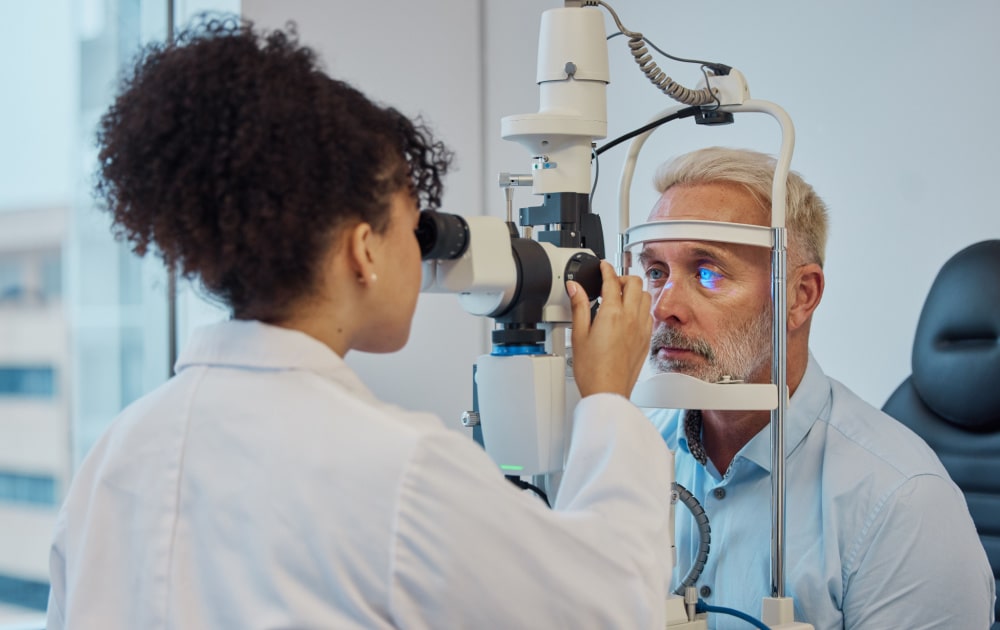
Eye conditions can make it difficult to conduct everyday tasks, including performing your job duties. If you suffer from eye problems and are unable to work, you might be eligible to receive disability insurance. Here, we explain what vision qualifies for disability, review different eye conditions, clarify eligibility criteria, and offer guidance for the application process.
Why is Understanding Disability for Vision Loss Important?
Whether it is complete vision loss or weakening eyesight, sight loss is frightening, impacting the quality of your life and the lives of your family. If you can’t remain independent and earn a living, it becomes impossible to manage the increasing medical costs associated with your medical tests and treatment.
As a result, you might not be able to afford your treatment, increasing the risk of complete vision loss. Because vision loss also impacts your mobility, trying to work with vision loss can increase your risk of falls and injury. Therefore, these factors, including a continuing decrease in your financial security make it critical to understand whether your vision loss qualifies for benefits when you cannot work.
What are Disability Benefits?
Social Security Disability Insurance (SSDI) benefits are available to those with an established work history suffering from a disability that keeps them from working, whether employed or self-employed. The benefits provide financial support and are available to those who have made Social Security tax contributions to fund the benefits.
You can apply for SSDI benefits if your condition will last at least one year or result in death. However, to qualify, you must prove to the SSA your eye condition limits your ability to work not only in your current position but also to fill other job roles.
Vision Loss and SSDI
According to the Social Security Administration (SSA), being blind falls under special rules allowing you to receive benefits if you cannot work. This includes SSDI and the Supplemental Security Income (SSI) program. SSI is designed to provide financial assistance for older people and people with disabilities with limited income and resources. Those with disabilities can apply for SSI regardless of age.
If your vision doesn’t meet the SSA’s definition of blindness, but your vision problems alone, or combined with other health problems, prevent you from working, you might still qualify for disability, as long as you have worked long enough and paid your Social Security taxes. If not, you might qualify for SSI based on disability/blindness if your income and resources are under the required limit.
What is the SSA’s Definition of Blind?
The SSA considers you blind when your vision can’t be corrected to better than 20/200 in your better eye. Also, for SSDI, you can qualify if your visual field is 20 degrees or less in your better eye for a period that lasted or is expected to last at least 12 months. The duration of vision loss does not impact your eligibility for SSI benefits.
Can I Get Disability For Being Blind In One Eye?
The SSA measures your “best” eye when applying for disability, which means approval for legally blind in one-eye disability benefits is less likely.
Exploring Eligibility: What Eye Problems Qualify for Disability?
Other than being legally blind, the SSA recognizes the following eye conditions for vision loss disability applications:
- Partial sight/low vision: Limited vision due to trauma or diseases like glaucoma, diabetic retinopathy, brain disorders, etc.
- Cataracts: Cataracts resistant to surgery that make it impossible to work.
- Sjögren’s Syndrome: A systemic autoimmune disease that causes dry eye disease, eyelid inflammation, and corneal abrasions.
- Glaucoma: A group of eye disorders that can cause high pressure in the eye that damages the optic nerve, impacting vision.
- Hemianopia: Partial blindness or a loss of sight in half of your visual field caused by a damaged optic nerve or, in some cases, the brain. Note: Because this condition can sometimes be temporary, you will have to prove it will last at least one year to qualify.
- Macular Degeneration: Permanent macular deterioration causes central vision disruption, impacting reading, facial recognition, driving, and making out details.
- Ocular Melanoma: A rare form of cancer that causes visual distortions and can spread to other areas, including the liver.
How Do I Get Disability For My Vision?
Although you can apply for Social Security Disability benefits online, it can be difficult to complete the forms if you have vision issues. You can also apply at your local SSA office if you are mobile or have someone assist, such as a family member or disability advocate. To qualify at the initial application process, collecting all medical documentation from your doctors is essential to prove your vision loss will last at least one year and prevent you from performing substantial gainful activity.
If you are concerned your vision loss is not severe enough, it is still worth discussing your condition with a disability advocate. They will explain how the SSA uses the Residual Functional Capacity (RFC) evaluation to determine whether you can perform any other type of work despite your limited vision. Your RFC evaluation follows a course of ability questions that tell the SSA what kinds of work you can perform, if at all.
For example, if you are a delivery driver, making deliveries is out of the question for those with severe vision loss. However, you might still be able to do other jobs, such as taking customer calls. If the RFC evaluation determines that you cannot work or do so safely, regardless of the type of work, then the SSA will approve you for disability benefits.
Disability Application Tips and Resources
Here are some helpful tips and resources for individuals navigating the disability application:
- SSA Braille Access: If you require SSA resources in Braille, click here or have a loved one do so. Provide the title and publication number for your desired pamphlet or fact sheet.
- Advocacy: We’ve mentioned disability advocates above. Advocates are both your most helpful resource and most valuable tip when seeking benefits for vision loss. Only 32% of initial applications are approved without the assistance of an advocate. At Princeton Disability, our advocates understand the process. We will ensure you submit the necessary medical information, complete questionnaires to provide as much additional information as possible and have ongoing support from a team of compassionate disability experts.
- Denial: If you have been denied benefits due to vision loss, speak to disability advocates to help determine the reasons and immediately begin the appeal process.
Princeton Advocates offers free consultations to discuss your vision loss and determine the best course of action to receive the benefits you deserve. If your disability benefits were denied, we are also here to assist you in the appeals process. Click here to book your free consultation and set the balls in motion to start collecting your full benefits.