


Is Hearing Loss a Disability? Understanding the Impact on Individuals 50 and Above
by April L. Roberts | Jul 26, 2023
Hearing loss is a common condition that can significantly impact the lives of people over 50. As a result, it helps to understand the implications of hearing loss and how it impacts your ability to carry on day-to-day living. Since, for some, hearing loss can impact their ability to work, being up to date on your eligibility to receive Social Security Disability Insurance (SSDI) is essential. Here we explore the question, “Is hearing loss a disability?” and how suffering hearing loss in the 50+ age group can potentially impact your quality of life.
What is considered hearing loss vs. hearing impaired?
Hearing loss occurs when someone experiences a change in their hearing ability. It can be temporary or permanent, worsen, or stay the same.
Is 50 percent hearing loss a disability?
Two tests determine hearing loss. The first is a word recognition test, which tests your ability to recognize words. The second is air conduction hearing. To be considered a disability, you must score 40% or less on the word recognition test and have an air conduction hearing threshold of 90 decibels or more.
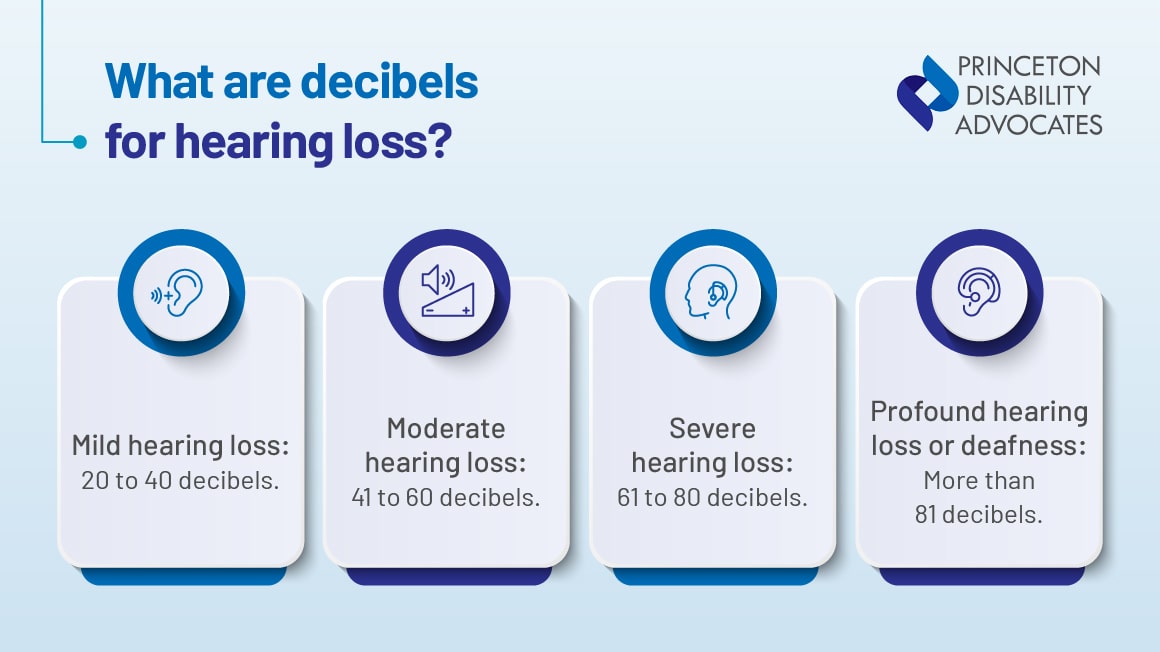
What are decibels for hearing loss?
Sound ability is measured in decibels. The higher the decibel, the louder the sound you can hear. Hearing loss up to 20 decibels below the hearing threshold is considered “normal hearing.” This is quite common as we age. However, when considering the severity of hearing loss, anything above 20 decibels becomes more troublesome. Here are the levels of hearing loss based on decibels:
- Mild hearing loss: 20 to 40 decibels.
- Moderate hearing loss: 41 to 60 decibels.
- Severe hearing loss: 61 to 80 decibels.
- Profound hearing loss or deafness: More than 81 decibels.
What is a hearing impairment?
Anything over 40 decibels is considered a hearing impairment.
What percentage of hearing loss is legally deaf?
Hearing loss of more than 81 decibels is considered legally deaf.
Is moderate hearing loss a disability?
No, the hearing loss must be over 40 decibels to be considered a hearing impairment or disability. You must have an average air conduction hearing threshold of 90 decibels or more in the good ear and an average bone conduction hearing threshold of 60 decibels in the better ear.
What is involved in hearing tests?
Air conduction testing measures your entire hearing system from the external ear to the auditory cortex. Bone conduction testing focuses on the sensorineural structures, which include your cochlea, eighth nerve, brainstem nuclei, and the area of the ear that relays sound to the auditory cortex.
What is the Legal Definition of a Disability?
Understanding your rights is important. According to the American Disability Act, a disability is defined as a “physical or mental impairment that substantially limits one or more major life activities, a person who has a history or record of such an impairment, or a person who is perceived by others as having such an impairment.”
Is hearing loss a disability under ADA?
Hearing loss is listed as a disability by the “Deafness and Hearing Impairments in the Workplace and the Americans with Disabilities Act.” Therefore, if you show you are substantially limited in hearing, even if you use a hearing aid or have a cochlear implant, the benefits of the apparatus are not considered when determining if your hearing impairment is substantially limiting.
People who are deaf are deemed to have a disability because they are considerably limited in significant life activity, as are people with a history of hearing impairment that has substantially limited a considerable life activity in the past.
What Impact Does Hearing Loss Have on Daily Life?
Hearing loss impacts daily life in several ways, including:
- The ability to communicate
- Meaningful and productive social interactions
- Developing relationships
- An overall sense of well-being
- Safety when you are unable to hear danger approaching
Hearing loss can lead to frustration, feelings of isolation, and, ultimately, a reduced quality of life. People who can’t carry out auditory tasks are also impacted by their environment related to background noise, competing sounds such as someone talking and a phone ringing, the acoustics of a room, and being in familiar surroundings versus unfamiliar surroundings. For example, you might be perfectly fine speaking in a quiet office with a co-worker one on one but become less engaged in a loud factory setting or at a meeting where people are talking over each other.
Accommodations and Assistive Devices for Hearing Loss
It is crucial to seek accommodation and assistive devices for hearing loss in the 50+ age group. This will ensure you can perform your work, communicate, and participate in social gatherings to maintain a higher quality of life. However, assistive devices also impact your ability to qualify for SSDI. For example, a “cochlear implant” is medically inserted and provides an improved sense of sound and automatically qualifies you to receive SSDI benefits for at least 12 months.
Listed in Section 2.11 of the blue book under Special Senses, the SSA considers you medically disabled if you have cochlear implants for at least 12 months and will reevaluate your claim at some point following the initial 12-month period. Your hearing loss must remain severe, and your score must be less than 50% on a word recognition and HINT test to continue receiving your benefits.
What are Hearing Loss Disability Requirements: Is Hearing Loss a Disability?
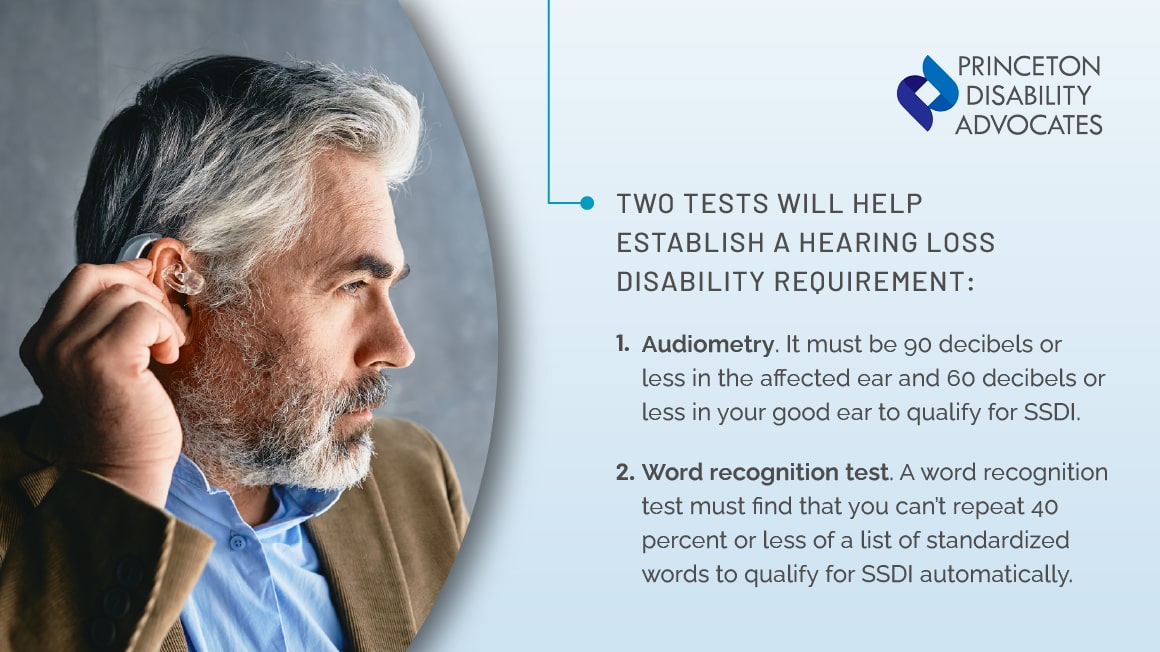
The Social Security Administration (SSA) does list hearing loss as an automatic impairment. Two tests will help establish a hearing loss disability requirement:
- Audiometry. It must be 90 decibels or less in the affected ear and 60 decibels or less in your good ear to qualify for SSDI.
- Word recognition test. A word recognition test must find that you can’t repeat 40 percent or less of a list of standardized words to qualify for SSDI automatically.
When to Seek Professional Guidance
If you are 50 years and over and suffer hearing loss, it’s crucial to understand your options. Undergoing tests, seeking accommodations, and understanding hearing loss classification as a disability can be challenging. However, with the guidance of hearing healthcare professionals and audiologists, you can establish your disability, explore assistive technologies, and access appropriate accommodations. You can then speak to a disability advocate to learn about SSDI for hearing loss and improve your odds of qualifying for SSDI benefits.
If hearing loss is impacting your ability to communicate, enjoy social interactions, and maintain an overall sense of well-being, the advocates at Princeton Disability can help. Call and speak with Princeton Disability about your specific case to determine if you are eligible to receive SSDI benefits today.