


Does Age Matter?: Analyzing SSDI Approval Rate by Age
by April L. Roberts | May 2, 2024

Emma, a 38-year-old with a recent diagnosis of multiple sclerosis, finds herself surrounded by medical bills and paperwork. Her condition, which is progressing more rapidly than anticipated, has forced her to leave her job as a school teacher. Similarly, 60-year-old Jack, who has had a long career in manufacturing, is now hindered by chronic arthritis.
As both face the uncertainty of their working futures, they turn their attention to applying for Social Security Disability Insurance (SSDI). Their differing ages lead them to the same critical question: How does the SSDI approval rate by age influence them? This blog seeks to explore this question, providing a clear understanding of how SSDI views age in the context of disability and work inability.
What is SSDI, and Why is it Important?
Social Security Disability Insurance (SSDI) is a program designed to assist individuals who are unable to work due to a disability. It offers financial support to those who have previously worked but are now unable to do so because of their health condition. This program plays a crucial role in providing income and support to people who find themselves unable to work due to their disability, ensuring that they have the means to meet their basic needs despite their inability to engage in gainful employment.
Does Being Older or Younger Affect Getting SSDI?
Have you ever considered whether your age affects your eligibility for SSDI, especially in terms of SSDI approval rates by age? This is not a straightforward “yes” or “no” question, as it entails understanding the government’s regulations and the diverse circumstances in which individuals find themselves.
Understanding SSDI
What is SSDI Exactly?
SSDI is a specialized program designed for individuals who cannot work due to a severe health issue. For instance, if someone has a job but becomes seriously ill or injured and can no longer work, SSDI provides financial assistance to them every month. The funds for this support come from a pool that workers contribute to during their employment, similar to depositing money into a piggy bank that you can access later.
Who can get SSDI?
Only some people are eligible for SSDI, as there are specific criteria for qualification. Firstly, you must have worked for a certain number of years (10 or more) and contributed to the SSDI system. Additionally, your health condition must be sufficiently serious to render you unable to work. The government maintains a list of qualifying conditions, but it also considers other factors, such as medical records and the opinions of attending physicians.
SSDI Approval Rate and Age: The Connection
Statistical Trends in SSDI Approval Rates by Age
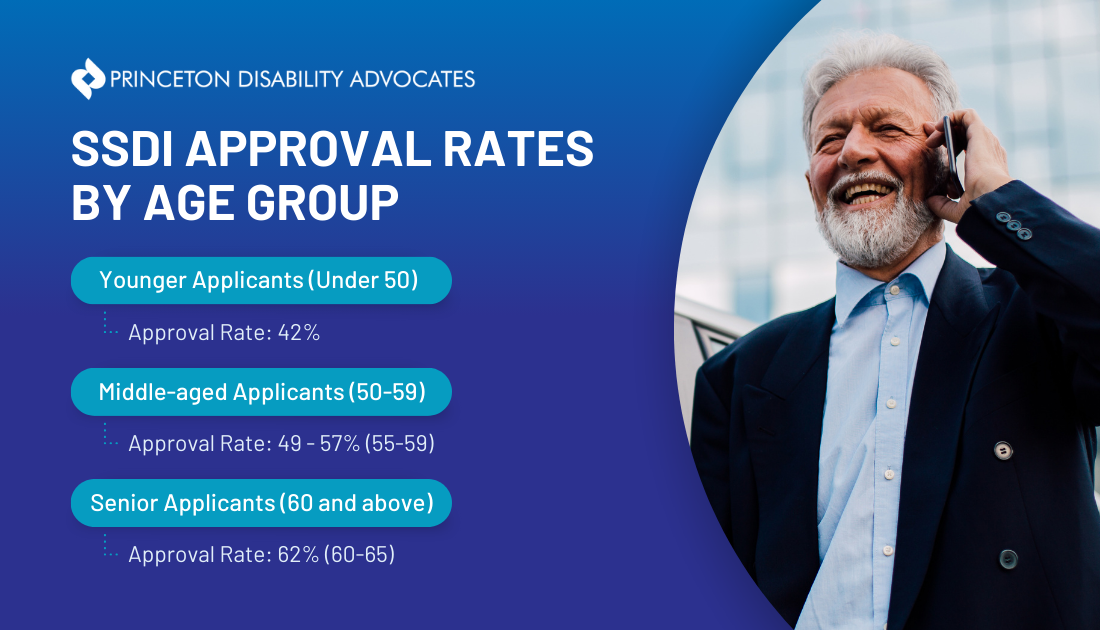
When we look at the numbers, a pattern emerges in the SSDI approval rates by age for different groups. Although specific percentages can vary year by year, generally speaking:
- Younger applicants (under 50): The approval rates tend to be lower. For instance, according to Marca.com, individuals with disabilities in the 40-49 age group tend to have a 42% approval rate when applying. This reflects the belief that younger individuals have a better chance of adapting to new work situations despite their disabilities.
- Middle-aged applicants (50-59): The approval rates start to climb. Individuals aged 50-54 have a 49% approval rate, while those in the 55-59 age group enjoy a 57% approval rate. Adapting to new work becomes more challenging as people age.
- Senior applicants (60 and above): The highest approval rate, at 62%, is among individuals aged 60-65. The reason is that as people get older, it’s harder for them to adjust to new jobs, especially if they have a disability.
Analyzing SSDI Approval Rates by Age Group
Young Applicants and SSDI
Let’s begin with the younger demographic, individuals in their 20s and 30s. For them, obtaining SSDI benefits can be more challenging. Why? Because the SSDI system often assumes that younger individuals can adapt to new types of work more readily, even with their disability. As a result, the SSDI approval rate for this age group might be lower than it is for older individuals. However, it’s not impossible. If a young person’s health condition is genuinely severe and prevents them from working any job, they still have a chance of qualifying for SSDI.
Middle-Aged Applicants
Now, let’s consider individuals in their 40s and 50s. This group falls in the middle — neither young nor senior. The SSDI approval rate for this age group can fluctuate, depending on their health and its impact on their ability to work. However, people in the 50 age group may have slightly better chances of approval than younger applicants, particularly if their condition limits their work options.
Seniors and SSDI
Lastly, let’s discuss seniors, individuals over the age of 60. This group typically experiences a higher SSDI approval rate by age. The reason is relatively straightforward: as we age, our bodies naturally encounter more health challenges, and it becomes increasingly difficult to adapt to new work. Therefore, when a senior applies for SSDI, the system is more likely to acknowledge that their age and health issues make working challenging.
Factors Influencing SSDI Approval Rates Beyond Age
Health Conditions Matter Significantly
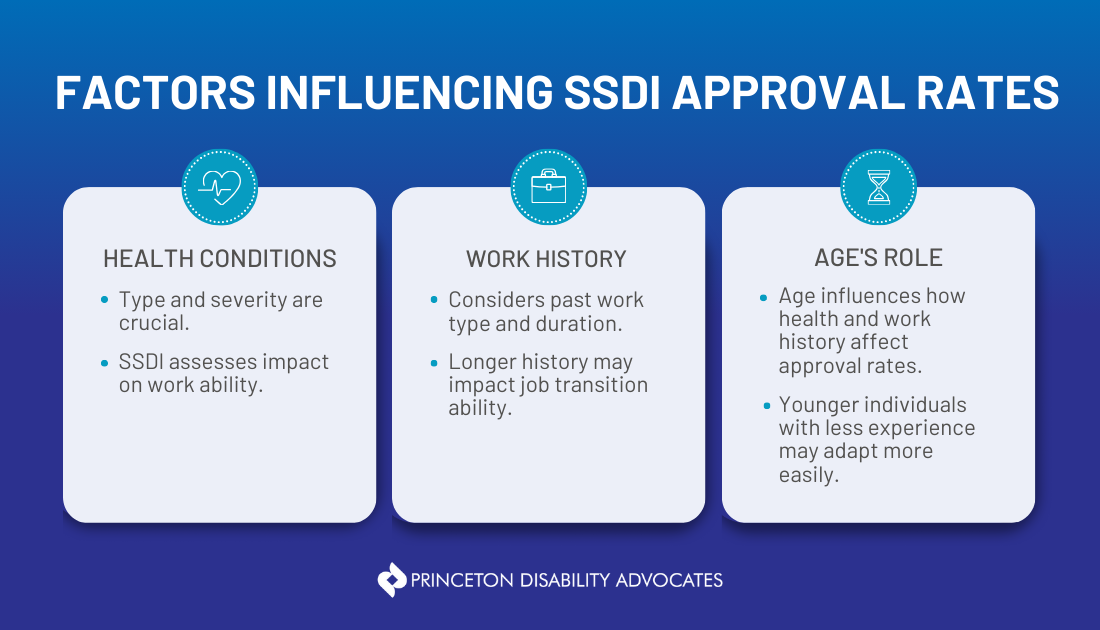
Health conditions play a significant role in SSDI eligibility. Although age is a major factor, it’s not the sole determinant of SSDI approval rates by age. The type and severity of your health condition are crucial considerations. Certain conditions are so severe that they qualify you for SSDI, regardless of age. The SSDI system meticulously examines medical records and seeks doctors’ opinions to assess how a health issue impacts your ability to work.
Work History Counts Too
Work history is another crucial factor. The SSDI system considers the type of work you have performed in the past and the duration of your employment. If you have a lengthy work history, it may be more challenging for you to transition to a new type of job, particularly if you have a disability. This can enhance your likelihood of qualifying for SSDI.
The Complex Interplay With Age
Age once again becomes a significant factor in this context. The influence of health conditions and work history can vary based on SSDI approval rates by age. For example, a younger person with less work experience is expected to adapt more easily to different work situations than an older person with a long, specialized career.
Implications for Applicants
Advice for Younger Applicants
For younger individuals contemplating applying for SSDI, it’s crucial to recognize that your age might present additional challenges. However, it’s important not to lose hope. The focus should be on clearly demonstrating how your health condition hinders you from working any job, not just your past job. Comprehensive medical records and robust support from your doctors can significantly bolster your case.
Middle-Aged Applicants: Finding the Right Approach
If you’re in your 40s or 50s, your application strategy might need to balance your work experience with your health issues. Be prepared to explain why your condition stops you from using your work skills in a different job. The more evidence you have from your medical records and doctors, the better your chances are if you’re over the age of 50 or in your 40s.
Seniors and SSDI: Playing to Your Strengths
Your age could work in your favor if you’re over 60. Highlight how your age, combined with your health condition, limits your job options. It’s still essential to have strong medical evidence, but the system tends to be more understanding of the challenges faced by older applicants.
General Tips for All Ages
Regardless of your age, ensure that your application is thorough. Include all your medical records, a detailed work history, and strong doctor statements. And remember, applying for SSDI can be complex, so getting guidance from experts like those at Princeton Disability Advocates can make a big difference.
Navigating the SSDI Application Process
Starting Your SSDI Application
Applying for SSDI can feel overwhelming, but knowing the steps can make it easier. The first step is to gather all your information. This includes your medical records, work history, and any other documents showing how your disability affects your life. You can apply online, over the phone, or in person at a Social Security office.
Filling Out the Application
When you fill out your SSDI application, be as detailed as possible. Explain your work history, your health condition, and how it stops you from working. Remember, the people reviewing your application might not know you or your situation, so your application needs to tell your whole story.
After Submitting Your Application
Once you submit your application, there’s a waiting period. The SSDI office will review your application and make a decision. This can take several months, so be prepared for that. During this time, they might ask for more information or schedule you for a medical examination.
If You Get Denied
It’s not uncommon for SSDI applications to be denied at first. If this happens, don’t give up. You have the right to appeal the decision. Many people who appeal end up getting approved later.
Getting Help with Your Application
The SSDI application process can be tricky, and asking for help is okay. Groups like Princeton Disability Advocates are there to guide you through each step. They can help you fill out your application, gather the correct documents, and even assist with appeals if needed.
Wrapping Up: Key Insights on Age and SSDI Approval
Age is a significant factor in SSDI approval rates, with older applicants generally having higher chances of approval. However, it’s not just about age. Your health condition, work history, and how well you document your case are also crucial. A well-prepared application is your best chance of success, regardless of age.
Next Steps: How Princeton Disability Advocates Can Help
If you’re considering applying for SSDI or have faced challenges in your application process, remember you’re not alone. Princeton Disability Advocates specialize in guiding individuals through the SSDI application and appeal process.
With expertise in handling the complexities of SSDI applications, Princeton Disability can be your partner in this journey. From gathering the necessary documentation to offering advice on appeals and SSDI approval rates by age, their support can be invaluable, especially in understanding how your individual circumstances can impact your application.
Taking the first step can be the hardest part, but it’s easier with the right help. Contact Princeton Disability Advocates today for the guidance and support you need for your SSDI application. Together, we can navigate this path to a successful outcome.